

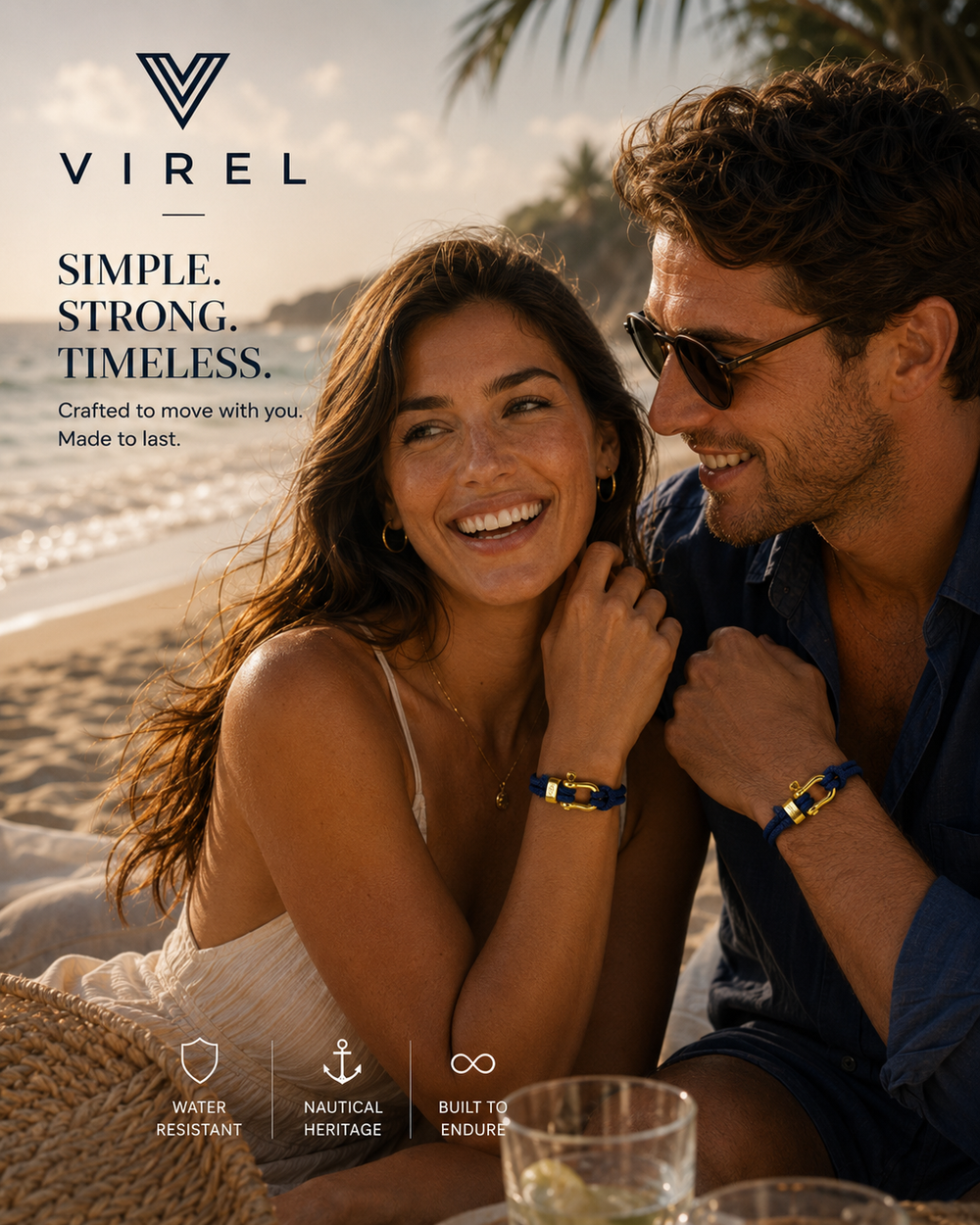
Some jewelry is chosen to be noticed. A pair of rope bracelets is usually chosen for a quieter reason. Two people pick them together, put them on, and stop thinking about them by the second week. That easy familiarity is exactly what makes a pair work.
At VIREL Jewelry, a good number of the bracelets we send out leave in twos. Sometimes it is a couple heading somewhere warm, sometimes it is an anniversary, and sometimes it is simply two people who liked the same rope. This guide is written for that moment: how to choose a pair that suits both wrists, both wardrobes, and both routines, without ending up with matching accessories that neither of you actually wears.
Matching Does Not Have to Mean Identical
The most common mistake is treating a pair as a uniform. Two identical bracelets on two very different wrists can look less connected than you would expect, because the same width reads differently on a slim wrist than on a broad one, and the same color sits differently against different skin tones and sleeves.
A pair works best when it shares one clear idea and lets everything else differ. That shared idea might be the color of the rope, the finish of the clasp, or the construction of the braid. Once a single element links the two bracelets, the differences stop looking accidental and start looking deliberate.
Start With Two Wrists, Not One Idea
Before choosing colors, look at the two wrists honestly. One may be noticeably slimmer. One may already carry a watch while the other stays bare. One person may push a bracelet high on the forearm, and the other may prefer it sitting low near the hand.
These details matter more than color, because they decide whether each bracelet gets worn at all. A bracelet that has to be adjusted every hour ends up in a drawer, no matter how well it suits the other one.
Three Ways to Pair Without Looking Coordinated
The first approach is one color, two widths. Both bracelets use the same rope color, but one is a slim single wrap and the other a fuller double wrap. The color does the connecting work while the scale suits each wrist. This is the safest option when two people dress quite differently.
The second approach is one family, two shades. Navy with steel gray, burgundy with deep brown, or teal with turquoise. Nothing repeats exactly, yet the pair clearly belongs together. It tends to photograph well and feels less matched in person, which many people prefer.
The third approach is one detail, two designs. The bracelets differ in color and construction but share the same clasp finish, the same shackle hardware, or the same weave. It is the subtlest of the three and often the most durable choice, because neither person is tied to a color they may tire of.
Choosing Colors You Will Both Live With
Look at what you already wear rather than what looks good side by side on a screen. If both wardrobes lean on navy, denim, white, and gray, a darker rope will disappear into daily use in the best possible way. Navy is the quietest nautical choice. Black stays modern. Charcoal sits comfortably between the two.
If one of you wears more color than the other, resist the urge to meet in the middle. A neutral for one and a brighter shade for the other, connected by the same clasp finish, usually works better than two compromises. Brighter tones such as red, yellow, or turquoise carry a pair well when the rest of the outfit is simple.
Think About Where the Pair Will Actually Be Worn
Pairs are often bought with a trip in mind. Beaches, boats, long evenings outside. That is a good reason to think about water before style. Rope and steel handle sun, salt, and swimming better than most materials, but sunscreen, sand, and sweat still leave residue behind, and they leave it on both bracelets at the same rate.
If the pair is meant for holidays and water, choose colors that will not spend the summer looking dusty. Deeper shades hide salt marks and fine sand better than pale ones. Rinse both bracelets in fresh water at the end of a beach day and dry them away from direct heat. Our guide to caring for rope and magnetic-clasp bracelets covers this in more detail.
Sizing Two People at Once
Measure separately, and measure properly. Wrap a flexible tape or a piece of non-stretch string just below the wrist bone, keep it close to the skin without pulling, and note where the ends meet. Do it twice for each wrist to confirm the result.
Then decide on fit individually rather than as a couple. Add roughly half a centimeter to one centimeter for a snug fit, one to two centimeters for a comfortable everyday fit, and two to two and a half centimeters for a looser feel. Two people with the same measurement can easily prefer different lengths, and there is no reason for a pair to share a size. Our article on choosing the right rope bracelet works through sizing step by step.
Remember that construction changes the feel. A double-wrap design occupies more space than a slim cord of the same listed length, so if one of you chooses the fuller style, allow a little more room.
Giving a Pair as a Gift
A pair makes an unusually good gift because it carries an idea without being formal. It is also easier to size than a ring and easier to wear than a necklace. If both bracelets are a surprise, look at what the other person already wears rather than guessing. An existing bracelet can be laid flat and measured end to end, including the clasp.
When you are unsure, choose the more comfortable fit rather than the snug one. A bracelet that sits a little loose can still be worn happily. One that is too tight tends not to be worn at all.
Caring for Two Bracelets That Live the Same Life
A pair ages together, which is part of the appeal, but it also means both bracelets pick up the same habits. Take them off by holding the clasp rather than pulling on the rope. Keep them away from chlorine and harsh cleaners. Let them dry fully before storing them, and store them flat rather than tightly coiled.
Done consistently, this keeps both bracelets looking like a set, rather than one well-kept bracelet and one that has had a harder year.
The Point of a Pair
A pair of bracelets is not a statement. It is a small, repeated detail that two people happen to share, noticed mostly by them. Choose sizes that fit each wrist, colors you both already live with, and one element that quietly links the two, and you will end up with something you both reach for without thinking.
You can browse the shackle designs in The Mariner Collection, the double-wrap styles in The Voyager Collection, or see every VIREL bracelet in one place.